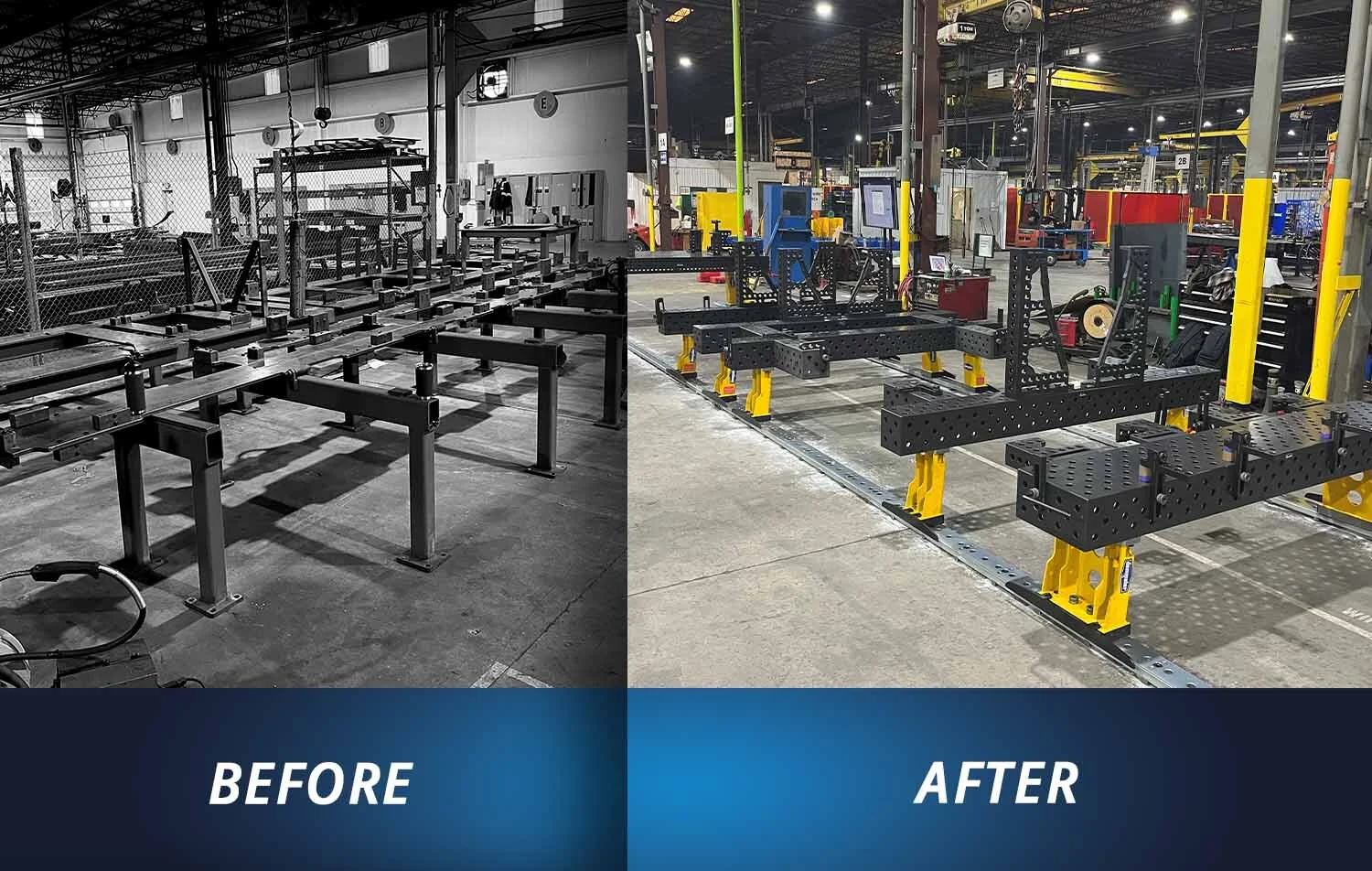
Before You Ask What Workholding Costs, Ask What It’s Costing You
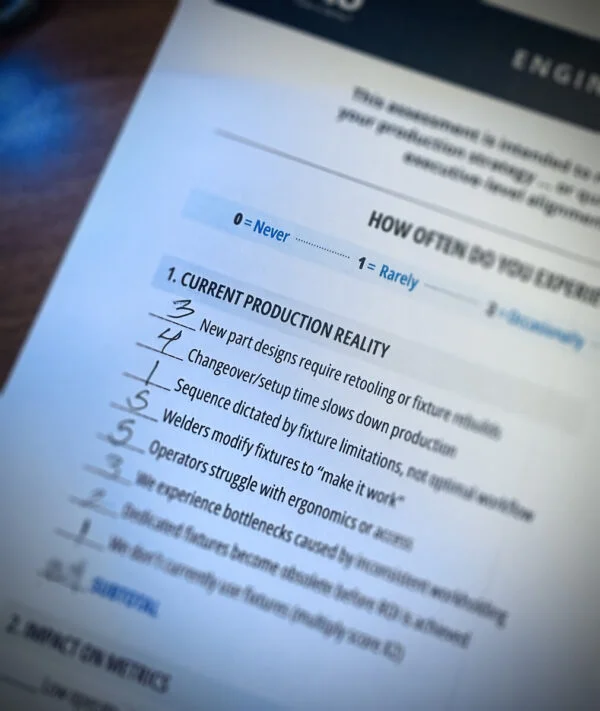
When workholding is evaluated only by price, manufacturers may miss the bigger issue: what the current process is already costing them. Here’s how to shift the conversation from purchase cost to production ROI.
“How much is it?”
We hear this every day. If you’ve ever asked us this yourself, you’ve probably noticed this question is NEVER the first one we address.
There’s a good reason for this.
To put it simply, you can’t accurately assess the true cost of a workholding solution until you calculate what your current process is already costing you.
In this article, we’ll dive into why this matters, how to accurately calculate the cost of your current process, and what you can expect to gain from shifting your perspective on the capabilities modular workholding unlocks.
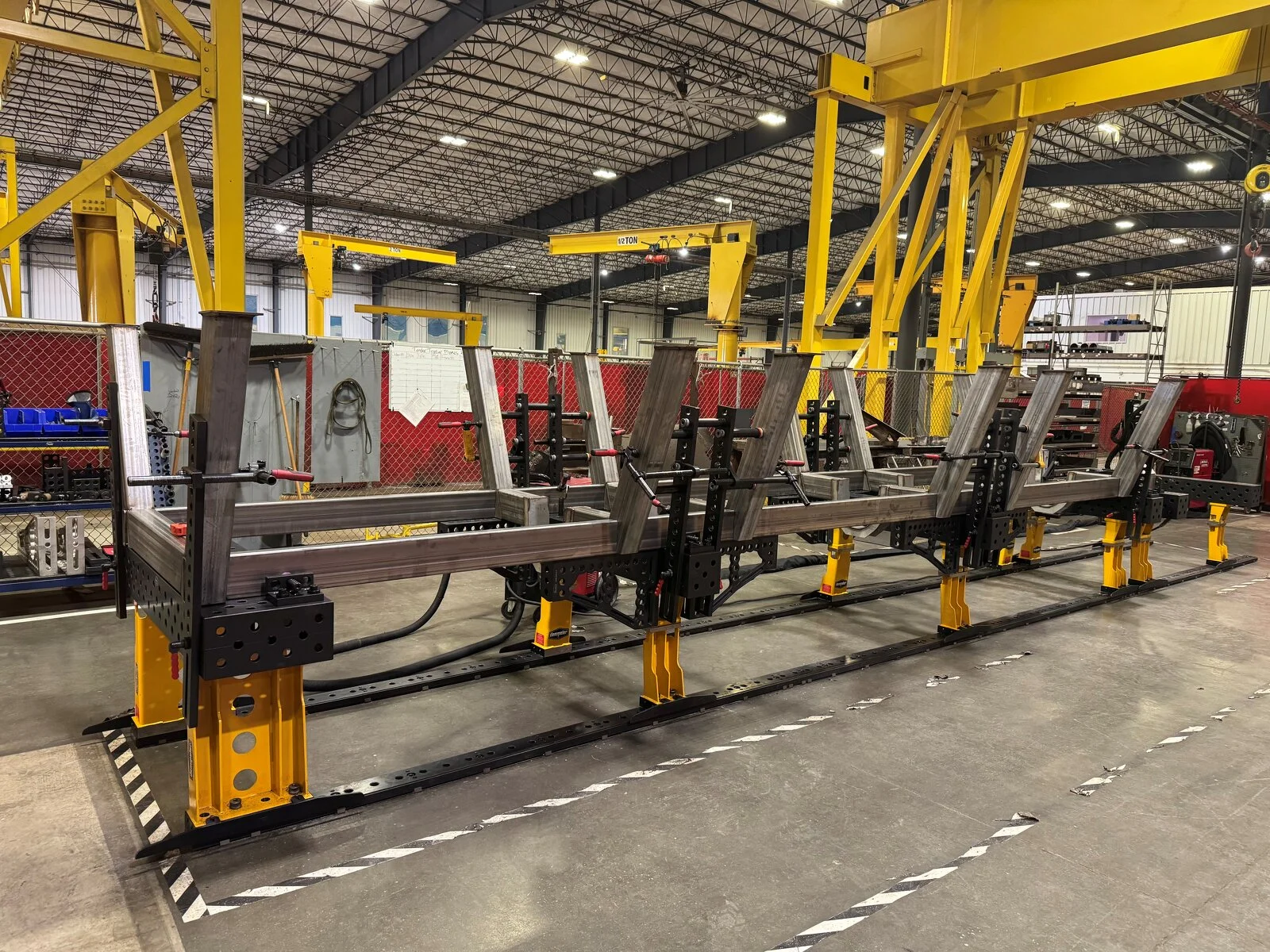
The reality of old habits in a new market
We get it. You’re trained to compare quotes.
That makes sense. When you’re buying steel, consumables, hardware, purchased parts, or even some types of equipment, price comparison is part of the job. You look at the options, weigh the cost, check the specs, and make the best decision you can.
But here’s the thing: when it comes to the real-world challenges today’s manufacturers face, the processes that once worked well may no longer be enough.
The market now requires more volume, variation, and repeatability than ever before. You have to do more with less – and do it more accurately while you’re at it.
Under those conditions, a cheap fixture can be the most expensive decision you’ll ever make.
Download “The Cost of Doing Nothing”
Not because the steel costs more than expected, or the quote was misleading. But because the fixture may leave the real problem exactly as it was.
The job still takes too long. Setup still depends on the same one or two people. Parts still need to be measured, adjusted, checked, and reworked. Your bottleneck is still there. The only thing that changed was the purchase price.
That’s why you shouldn’t evaluate workholding only as a purchase. Instead, evaluate it as a production asset.
Why the old production math is breaking down
Today’s manufacturers are not just being asked to build more. They’re being asked to build more versions of what they already build – with fewer people, tighter timelines, and less room for error.
That pressure is showing up in the numbers. A recent “State of Manufacturing” report found that 67% of manufacturers now describe their products as very or extremely complex, up 20 points in a single year. Among industrial machinery manufacturers, that number rises to 75%. The same report found that nearly 70% of manufacturers configure-to-order 20% to 59% of their portfolio, putting many companies in the difficult middle ground between engineered-to-order flexibility and repeatable production.
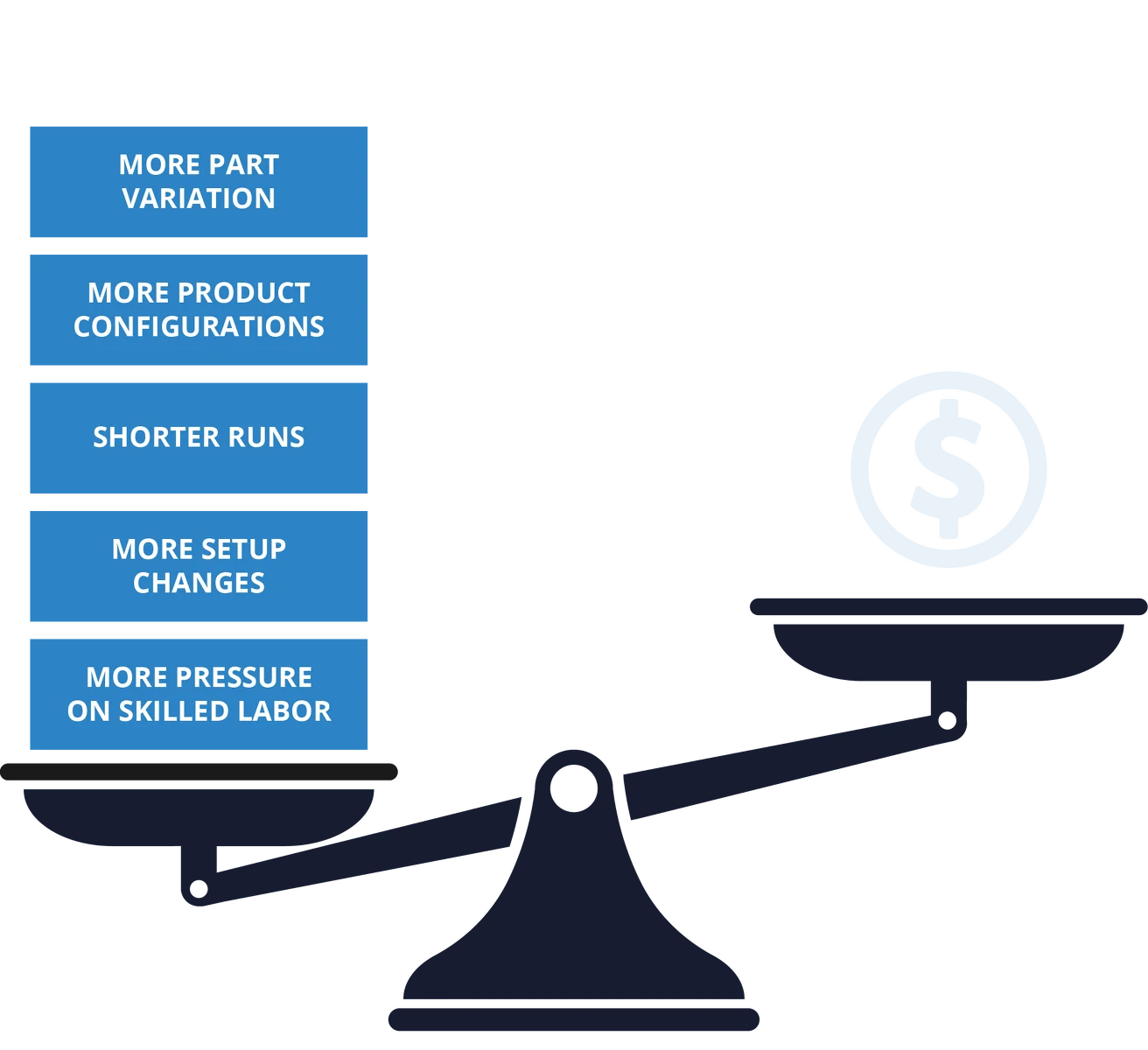
For fabricators and industrial manufacturers, that complexity is about more than stats on paper. It shows up on the floor as more part variation, more product configurations, shorter runs, more setup changes, and more pressure on skilled labor.
That changes the equation.
A fixturing process that worked well when parts were consistent, labor was available, and variation was manageable may not hold up under today’s production demands. When every build requires more setup, more adjustment, more tribal knowledge, or more manual checking, the real cost isn’t just in the fixture. It’s in the capacity the old process can’t unlock.
Reframing workholding as a production asset
A purchase is something you buy. A production asset is something that changes what your process can do.
That distinction matters.
If a fixture simply holds the part, then yes, price comparison might be enough. But if your current process is slow, inconsistent, difficult to repeat, overly dependent on skilled labor, or limiting your capacity, then the fixture is only one part of a much bigger decision.
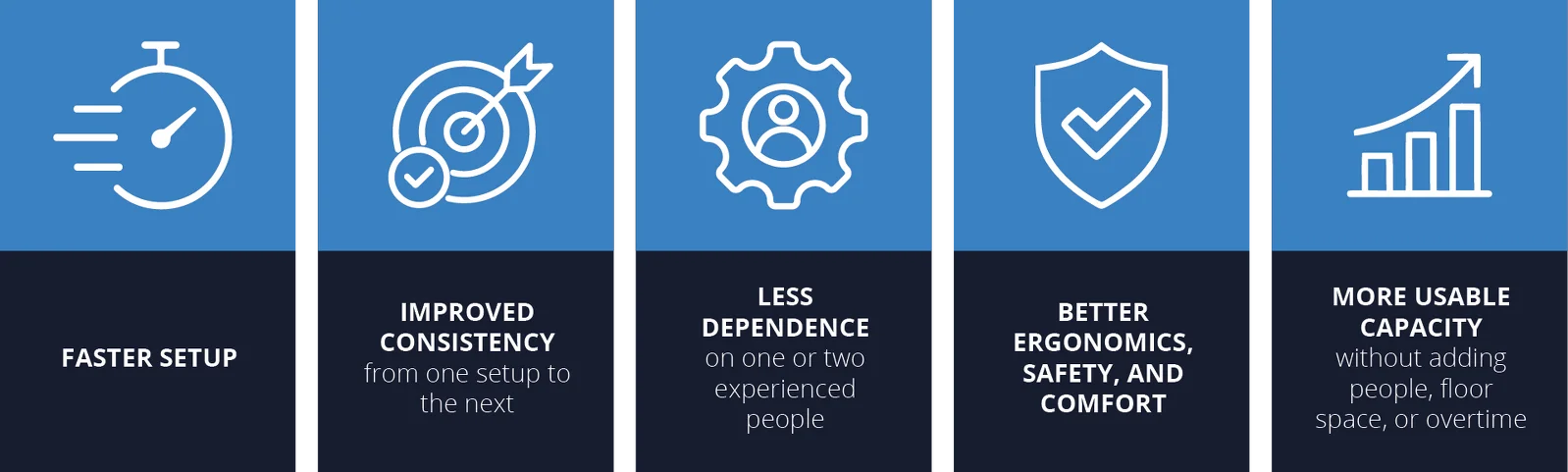
You’re not just buying steel, slots, holes, clamps, or components. You’re investing in a better way to build. And that investment should be measured by what you stand to gain:
Calculate the cost of your production process
You don’t need a complex financial model to get useful insight into what your current process is costing you. Start by looking at something that you can physically see: labor. To get a rough estimate of what it’s costing you, use this equation:

If a job takes two welders six hours, and your shop uses a $75/hour labor rate, the labor cost looks like this:

If you build that assembly 40 times per year:

It’s not a perfect ROI calculation, but it is a useful starting point. It gives you a number you can actually talk about. And in many cases, that number is missing from the fixture conversation entirely.
Next, ask what better workholding could change
Once you understand the labor cost of the current process, model the realistic improvement: how much time, staff or resources might you be able to save? The goal isn’t to prove a perfect ROI down to the penny. It’s to give the team a grounded way to compare the cost of staying the same against the value of changing the process.
Using the same example, let’s say better workholding changes the job from:
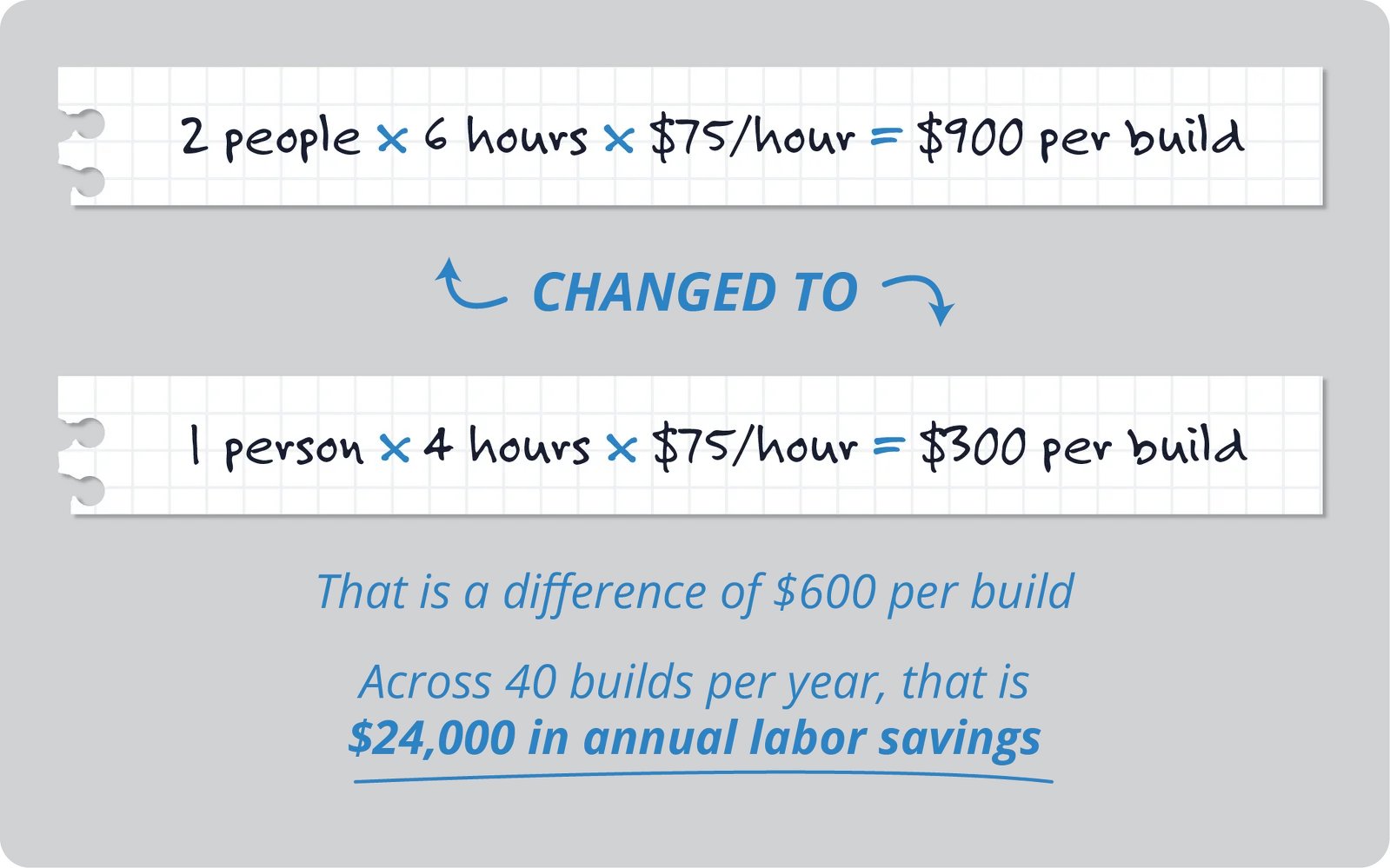
And that’s before you add in the cost of rework, scrap, overtime, downstream fit-up issues, missed capacity, schedule delays, etc.
The decision suddenly looks a lot different. Once you add up what’s at stake, the investment required for an engineered workholding solution can be evaluated more accurately. Suddenly, the initial cost is far outweighed by the long-term gain.
Need to figure out your shop’s true potential? Learn how we can help.
Cheaper Doesn’t mean better
At its most basic level, workholding holds a part in position. But the right workholding solution – one that is engineered to solve your challenges – does much more than that.
It shapes the sequence of the build, reduces variation from one setup to the next, and makes the process less dependent on tribal knowledge. It gives the team a more controlled way to repeat the work across shifts, operators, and product variations.
That’s the difference between a tool that helps with a task and a production asset that changes the process.
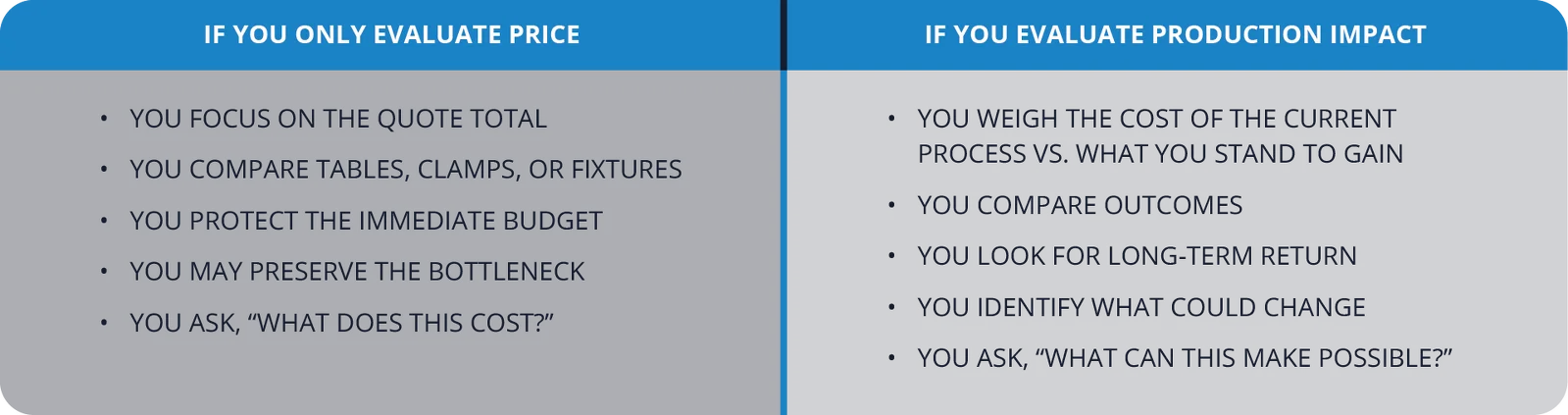
That difference should guide your decision process:
Workholding is more than just a place to put the part
A lower-cost fixture may look good on the front end. But if it leaves the same production constraints in place, did it really save money? If the same job still takes too long, still requires too many people, still creates too much variation, or still depends on one person’s experience, the budget may be protected … but so is the bottleneck.
That’s not savings so much as it is a cheaper way to stay stuck.
The key to success is changing your production math – by unlocking the hidden potential in your process and in your team. And that’s exactly what the right workholding solution can do for you.
Remember, the most expensive option is not always the one with the highest price. It’s the one that leaves the real constraint untouched.
FAQ: Workholding Cost, Labor Savings, and Production ROI
Why shouldn’t workholding be evaluated by price alone?
Purchase price only tells you what the fixture costs to buy. It does not tell you what your current process is already costing in labor, setup time, rework, variation, or lost capacity. A lower-cost fixture may protect the budget upfront, but if it leaves the same production problems in place, it may not actually lower your total cost.
How do I calculate workholding labor cost?
Start by calculating the labor already built into the process: how many people it takes, how long it takes, your labor rate, and how often the job runs. That gives you a rough annual labor cost you can compare against what a better workholding solution could realistically improve.
What should I look at besides fixture price?
Look at what the workholding solution can change. Could it reduce setup time or help one person do work that currently requires two? Consider whether it could also reduce measuring, adjusting, checking, or rework. Most importantly, determine whether it can make the process repeatable across multiple operators.
What makes workholding a production asset instead of just a fixture?
A fixture holds the part. A production asset improves what the process is capable of. Engineered workholding can shape the build sequence, reduce variation, improve repeatability, lower labor dependency, and help the same team produce more with less wasted effort.
How can better workholding reduce labor cost?
Better workholding can reduce labor cost by making setup faster, reducing manual adjustment, improving part location, and making the process easier to repeat. If a job moves from two people and six hours to one person and four hours, the labor savings can add up quickly across repeated builds.
Why can a cheaper fixture end up costing more?
A cheaper fixture can cost more over time if it preserves the bottleneck. If the job still takes too long, still requires too many people, still creates too much variation, or still depends on one person’s experience, the lower purchase price may only be hiding a higher production cost. Worse yet, cheaper fixtures may break down mid-project, adding unexpected new bottlenecks.
How does workholding affect repeatability?
Workholding affects repeatability by controlling how parts are located, held, and built from one setup to the next. When the setup is more consistent, the process becomes less dependent on tribal knowledge and easier to repeat across operators, shifts, and product variations.
What is the best first question to ask before buying workholding?
Before asking, “What does it cost?” ask, “What is our current process costing us?” That shift helps you compare outcomes, not just quote totals. It also makes it easier to see whether a workholding solution is simply a purchase or a way to remove a production constraint.
How do I know if I need engineered workholding?
Engineered workholding may be worth evaluating if your current process is slow, inconsistent, labor-heavy, difficult to repeat, dependent on one or two experienced people, or limiting capacity. Those are signs that the issue may not be the fixture alone, but the way the process is being held together.