Your Skilled Labor Problem Might Actually Be a Process Problem
How engineered workholding helps manufacturers reduce tribal knowledge, shorten training time, and build more repeatable fabrication processes
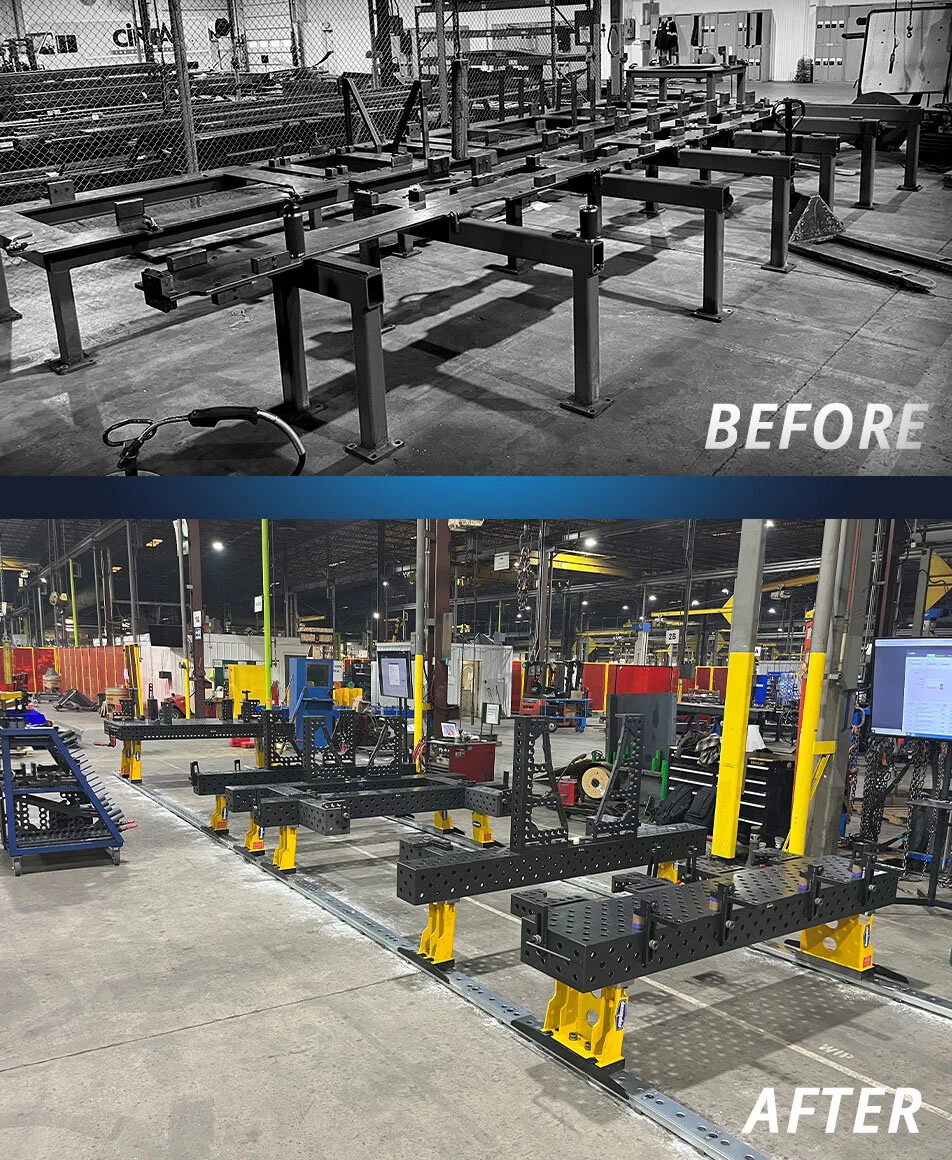
The skilled labor gap is real, but in fabrication, the problem is not always just finding more welders. Sometimes the bigger issue is that the process depends too heavily on the most experienced people in the building. This article looks at how engineered workholding can reduce tribal knowledge, shorten training time, and help manufacturers build a more repeatable process.
Manufacturers talk about the skilled labor gap all the time. And for good reason.
Experienced welders are retiring. Newer workers need time to get up to speed. And the people who know how to make the difficult jobs work are often not available because they’re the same people everyone depends on for…well, everything.
This concern about labor allocation issues isn’t limited to a single sector or area – it’s industry-wide. According to Deloitte and The Manufacturing Institute, U.S. manufacturing may need as many as 3.8 million additional workers in the next decade, with roughly 1.9 million of those jobs at risk of going unfilled if workforce challenges are not addressed.
You’ve probably heard stats like these more times than you can count. But in fabrication, the labor problem isn’t always just a hiring problem.
Sometimes, the bigger issue is that the process depends too heavily on the most experienced people in the building. The good news? You can actually reduce that dependence – not by eliminating people or jobs, but by changing your approach to workholding.
In other words, how you fixture parts impacts who can fixture parts.
Leaving workholding unengineered (or treating it as an afterthought) creates a problem that takes time and personnel to solve. But engineering that critical step in your production process fundamentally changes the process itself, making it repeatable and scalable.
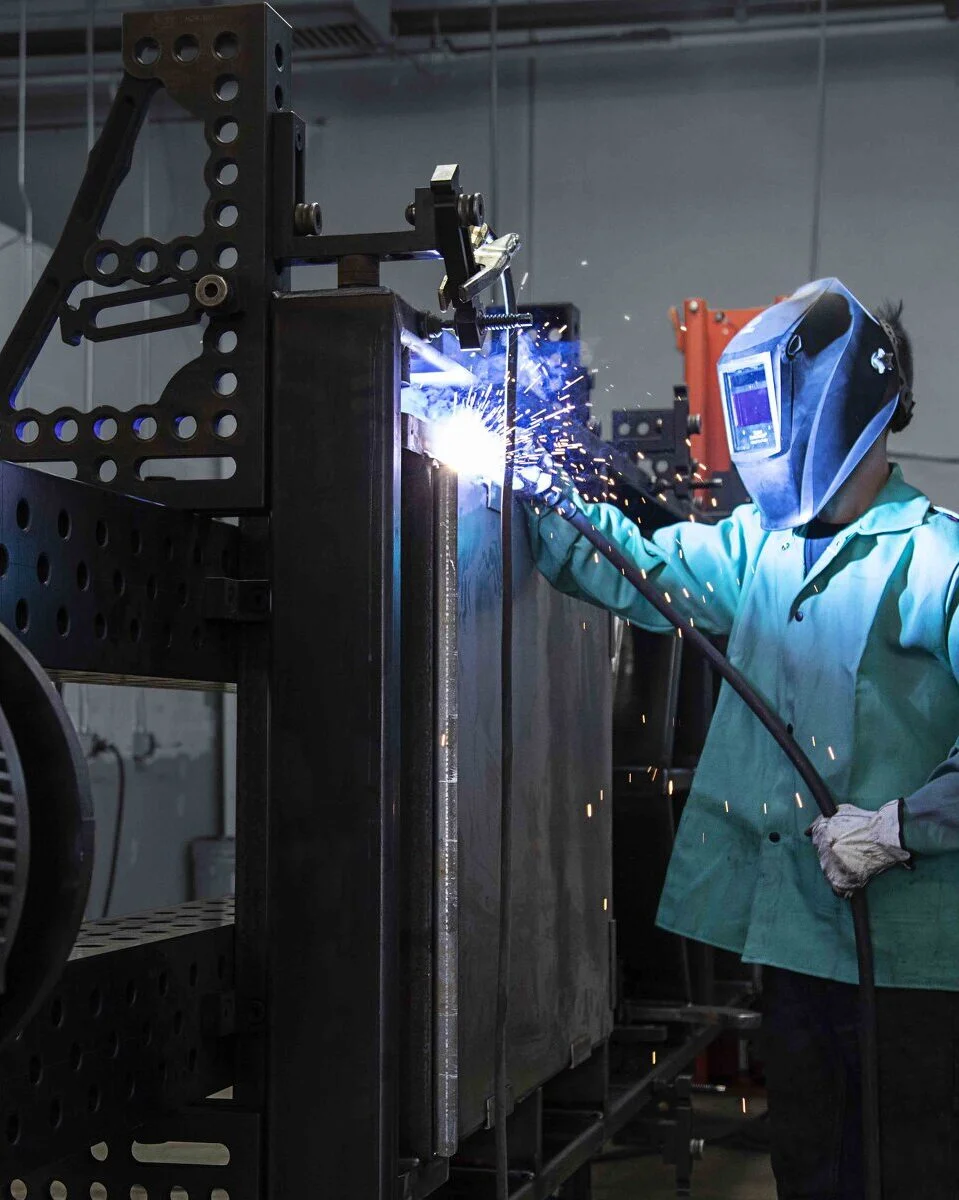
What an operator-dependent process looks like
An operator-dependent process is one where results depend more on the person running the job than the structure of the process itself.
You may see it in small ways:
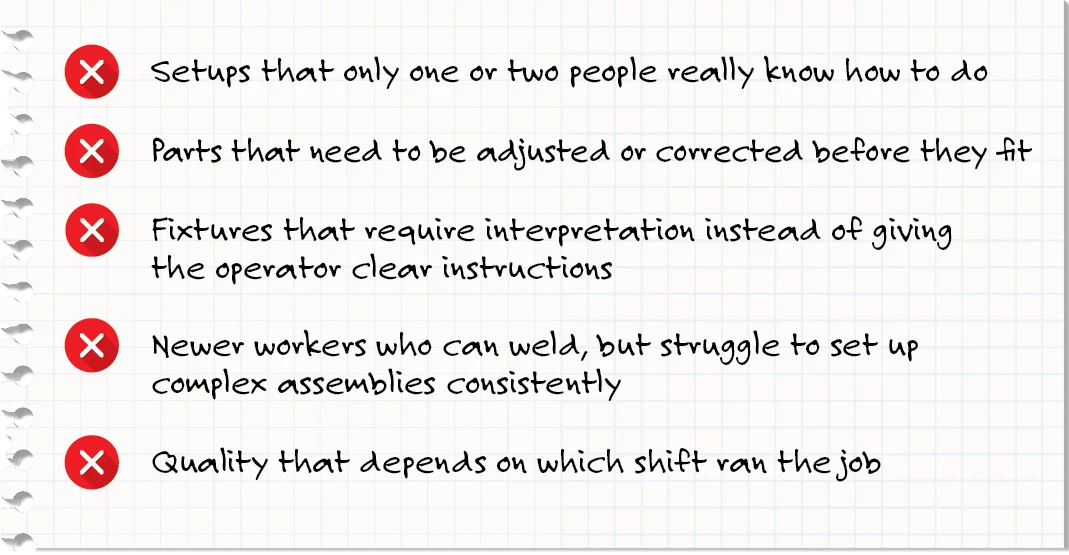
These problems are easy to normalize. After all, production is still moving and parts are still going out the door. Experienced operators are finding ways to make it work.
But that’s exactly the issue.
A process that relies on individual experience is a process that’s inherently limited and unnecessarily vulnerable. And 9 times out of 10, it’s not sustainable.
The goal is NOT to replace skilled welders
Make no mistake: reducing operator dependency does NOT reduce the value of skilled welders. In fact, it does the opposite.
It takes the burden of compensating for an undefined process off of their shoulders. When they no longer have to personally carry every difficult job across the finish line, they’re free to use their talents and skills in areas where it may be more impactful. They’re free to improve the process instead of just stabilizing it.
So how do you take the knowledge that lives in their heads and build more of it into the process? That’s where engineered workholding changes the game.
Learn what welders say about working with bluco modular solutions >
Why engineered modular workholding works
It’s not exactly breaking news that high-mix low-volume (HMLV) fabrication environments benefit from workholding processes that are repeatable, efficient and accurate. That’s been true for as long as HMLV has been around.
However, the shift to mass customization and the need to quickly scale complex fabricated assemblies have made it imperative for manufacturers to eliminate inefficiencies that were once easier to work around. It’s a shift that has fundamentally changed the rules for fixturing. The goal is no longer to build one good fixture. It’s to build a better fixturing process. And that’s where the precision, repeatability, versatility, and custom-design of engineered modular solutions are a perfect fit.
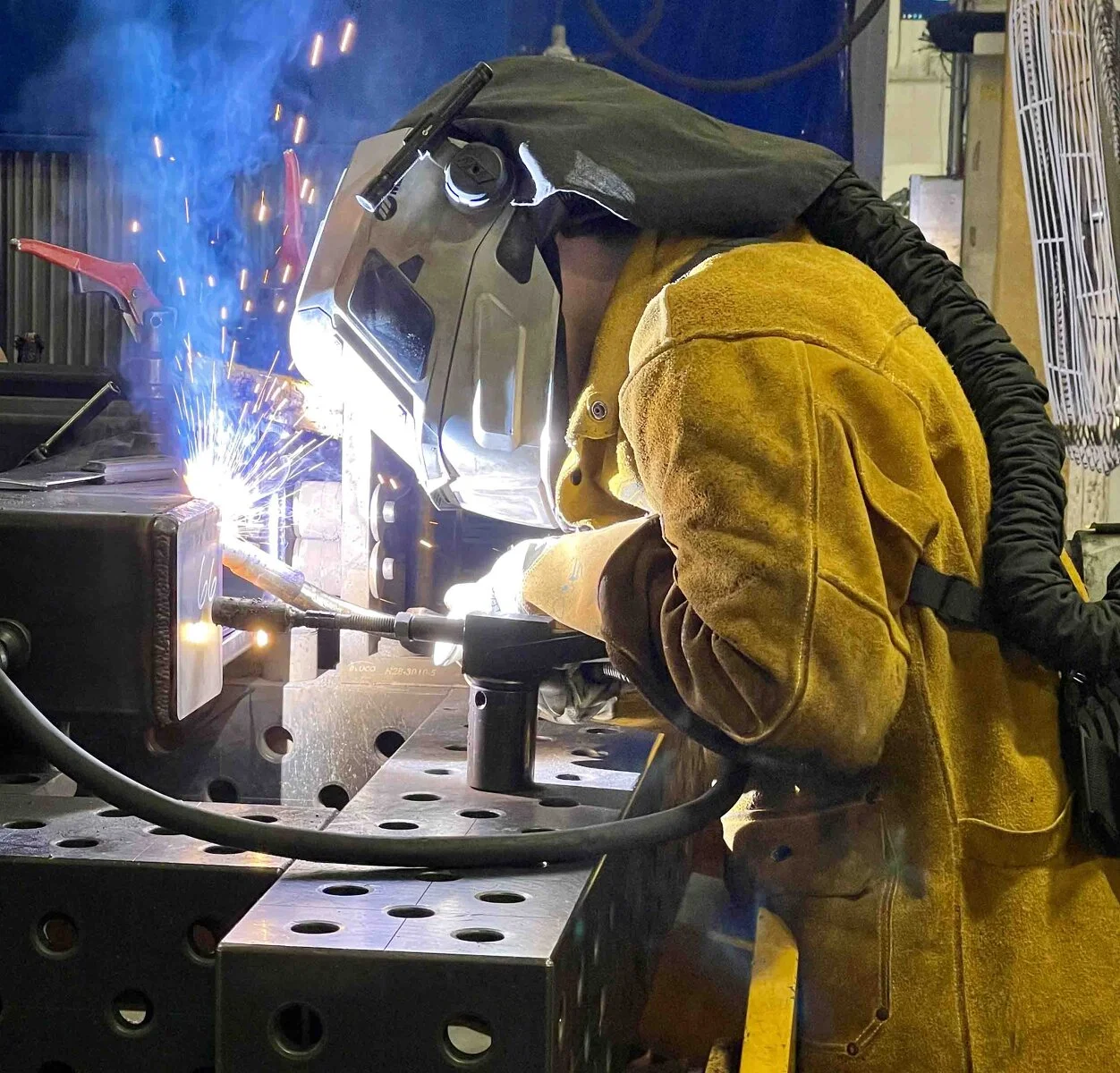
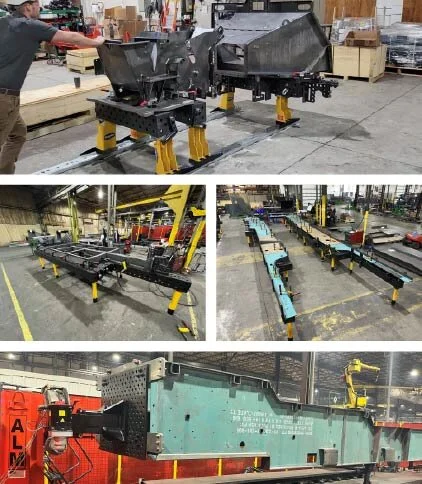
Because modular components are standardized – and the way they align and connect is deliberate, defined & precise – a modular setup can easily be repeated by another operator. There’s no guesswork, memory or workarounds required. The design of the system establishes how the job is done.
Pair that repeatability and precision with custom engineering that ensures the fixture solves your specific production challenges. The result is a fabrication process that’s more repeatable, scalable, and easier to execute:
Gives operators a clear starting point
Instead of requiring welders to locate, support and clamp the part from scratch each time, the system defines where key features belong and how the setup should come together.

Reduces the risk of error
Precision modular components position parts accurately without relying on tape measures, chalk lines, or manual layout. The precision and rigidity of the system also allows for instant detection of inconsistent part quality: if a part is too long, too short, or warped, the fixture will let you know.

Turns tribal knowledge into a repeatable setup
The best operators can still help shape the process, but other operators are able to achieve the same success independently. Setups are documented as CAD models that can be pulled up on the shop floor, and components go together without variation or interpretation.

Reduces the amount of interpretation required on the floor
When part positioning is built into the fixture, operators spend less time adjusting by feel, checking, correcting and rechecking. They have a process to execute and CAD modes to follow – not a puzzle to solve.

Helps newer operators become productive faster
By defining more of the setup, engineered modular workholding gives newer operators a clear process to follow instead of one they have to figure out. That shortens the learning curve and helps them become productive faster.

Creates consistency across shifts and operators
If the setup is defined by the system instead of by individual preference, the outcome is less dependent on who’s running the job that day.

Can be changed without starting over
In high-mix production, the next job is rarely identical to the last one. Modular workholding gives manufacturers the ability to adapt the setup as parts, products or production needs change, without going back to a blank slate every time.

Frees experienced welders to do higher-value work
When the system carries more of the setup logic, your best people are not constantly pulled into routine fit-up problems. They can focus on improving the process, solving harder issues, and training others instead of personally stabilizing every job.

That’s the real value of an engineered modular solution. It doesn’t remove skill from the process. Instead, it removes unnecessary guesswork. In a labor-constrained environment, that distinction matters: the more your workholding defines, the less your operators have to guess.
Workholding as a workforce strategy
The skilled labor gap isn’t going away anytime soon. And while hiring and training will always matter, the structure of the work itself can help ease the pressure on the people who do that hiring and training.
If the process depends on tribal knowledge, every retirement creates risk. Every new hire faces a steeper learning curve. Every increase in demand puts more pressure on the same small group of experienced people.
Engineered workholding helps reduce that risk by making the process easier to teach, easier to repeat, and easier to scale. It gives newer operators a clearer path to success, gives experienced welders freedom to focus on more complex jobs, and gives manufacturers the power to pivot in response to changing demand & market conditions.
Yes, the labor shortage is real. But the winners won’t necessarily be the ones who find more skilled welders. They’ll be the ones whose processes don’t depend so heavily on them.
FAQ
What is an operator-dependent fabrication process?
An operator-dependent fabrication process is one where consistent results depend heavily on the experience, judgment, or manual adjustment of specific workers. The process may work well when the right people are available, but it’s hard to repeat, train, scale, or improve.
How does workholding help with the skilled labor gap?
Engineered workholding helps reduce the amount of interpretation required during setup and fit-up. By defining how parts are positioned and held, it gives operators a clearer structure to follow and helps newer workers become productive faster.
Does better workholding replace skilled welders?
No. Better workholding does not replace skilled welders. It reduces the need for skilled welders to compensate for inconsistent setups, unclear processes, or preventable variation. That allows experienced workers to spend more time on higher-value work.
Why is tribal knowledge risky in fabrication?
Tribal knowledge becomes risky when critical setup, fit-up, or troubleshooting knowledge lives only with certain employees. If those employees retire, leave, or are unavailable, production can slow down, quality can vary, and training becomes harder.
When should a manufacturer evaluate their workholding process?
workholding processes should be evaluated when setup takes too long, quality varies between shifts, new operators take too long to train, experienced welders are constantly pulled into routine issues, or production needs to scale without adding unnecessary complexity.
How does your process stack up?
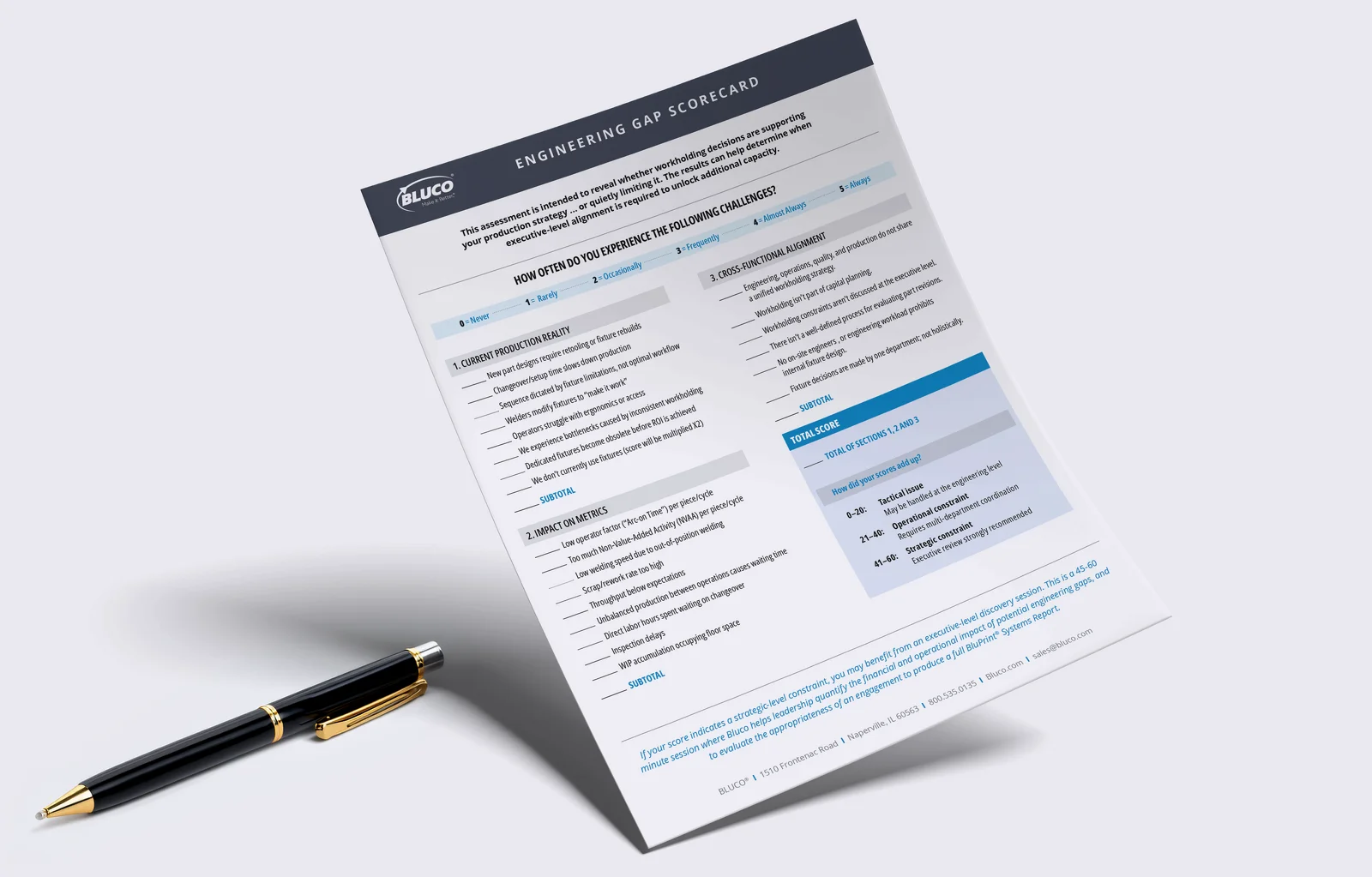
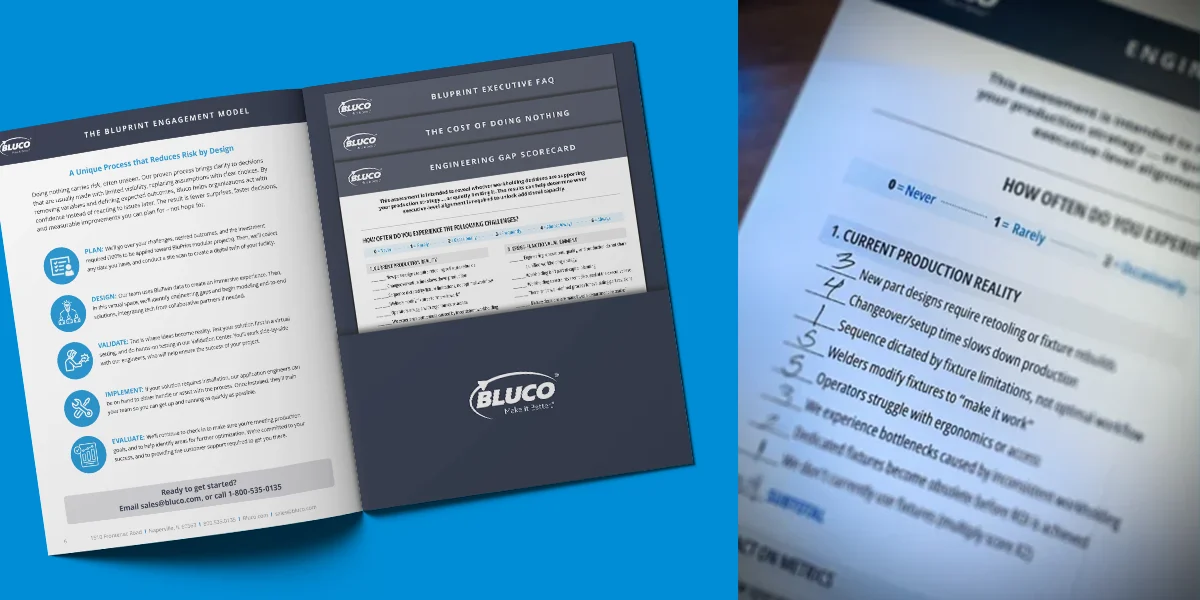
The Engineering Gap Scorecard can help identify where your current process may be limiting repeatability, training, throughput, or scalability.
Download the Scorecard and see where your workholding process may be carrying hidden risk.